What Exactly is a Temperature Blanket?
A temperature blanket, also called a “weatherghan” or a “4 season blanket” is more than just a cozy throw. It’s a colorful record of your year- each day you crochet or knit a row daily using yarn colors that represent the day’s weather or temperatures
This is a 365-day project. You knit or crochet ONE row per day
This is a huge undertaking, but the blanket does not get boring at all, working on this blanket feels familiar yet new each day. Imagine wrapping yourself in a blanket that maps out every day of the year, it is simply so special.
Before You Start: How to Plan Your Blanket
To begin your Temperature Blanket you will first need to answer 5 questions. This planning process is super important and helpful.
- Which yarn do you plan to use?
- What stitch are you going to use for this blanket?
- How big will your stitch make the finished blanket?
- How many colors of yarn do you want to use?
- What is your color scheme going to be?
While it is very tempting to plan your color scheme and buy your yarn first (a mistake, I did myself!) I highly recommend planning your Temperature Blanket by answering the above 5 questions in order.
- Which yarn do you plan to use? There are many yarns available to buy, and depending on your preference and what is available in your region, I recommend choosing a thinner yarn. A medium 4 thickness will work if you choose a stitch with minimal height. If you tend to crochet looser. then perhaps choose an even thinner yarn. If you choose a bulkier yarn, keep in mind that there will be 365 rows and that adds up in inches quickly with thicker yarns.
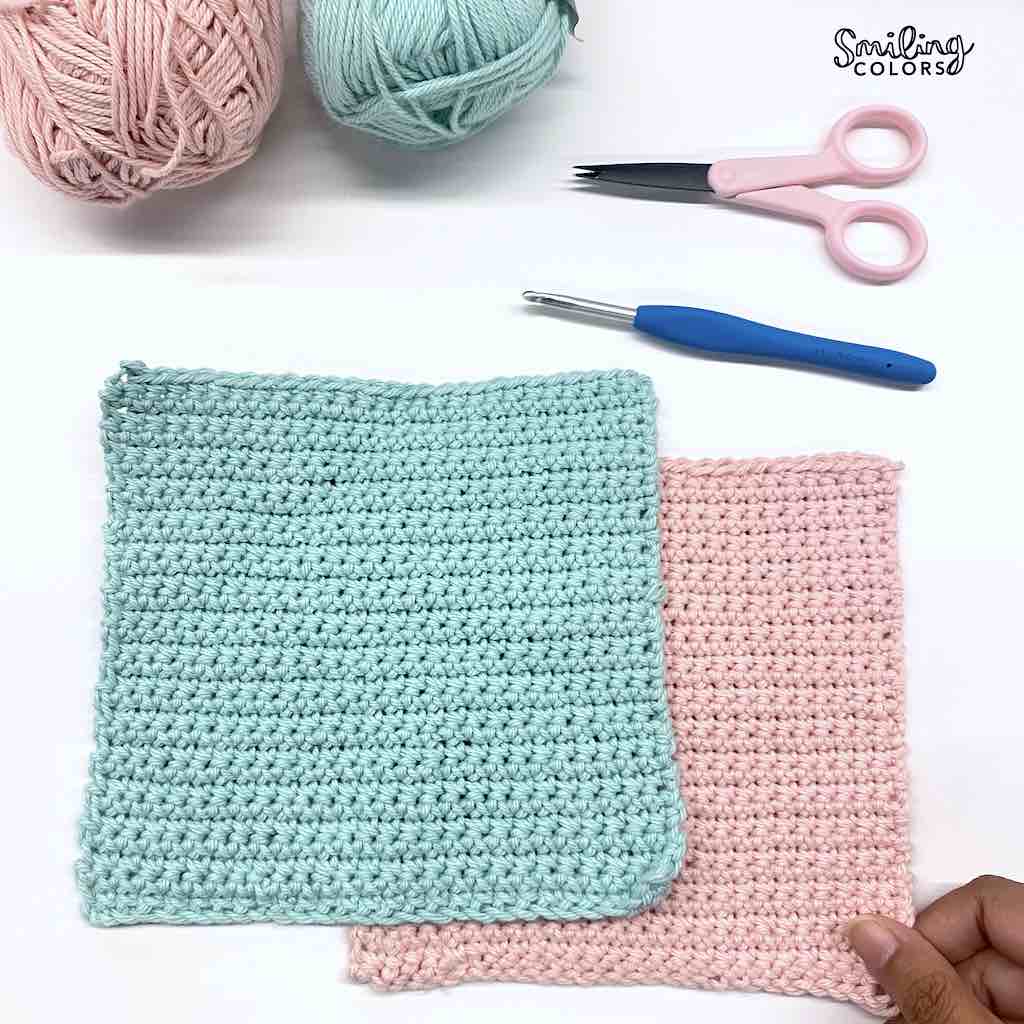
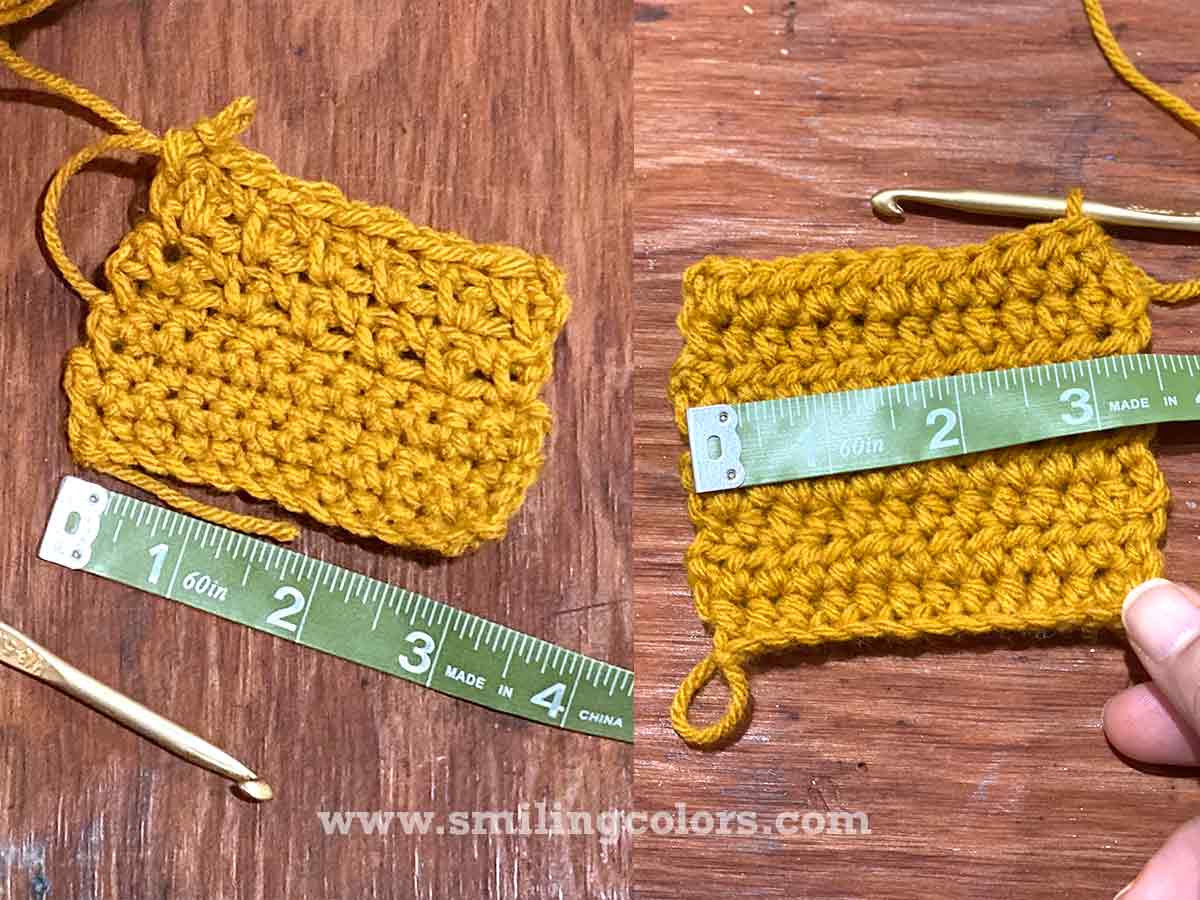
- What stitch are you going to use for this blanket? I had initially planned on doing a hdc or dc row daily. But my test gauge swatch math turned out to be helpful here! If I had done a dc row a day my blanket would be as large as 12 ft!! You should plan to use a stitch that has a short height- for beginers a single crochet or a crochet moss stitch works best.
- How big will your stitch make the finished blanket? With the moss stitch, according my gauge calculations, I will end up with a 72 inches long blanket. Thats about 6 ft long. so accordingly I started with a foundation chain to create a 55 inch wide size.
- How many colors of yarn do you want to use? This is where the fun begins! Depending on where you live, use a website like Accuweather to look at historical weather data. I live in Minnesota, and my temps can be anywhere from -30 to 100+! You can choose a different color for every 10 degrees, or go narrower and change colors in smaller increments of 5 or 6 degrees.
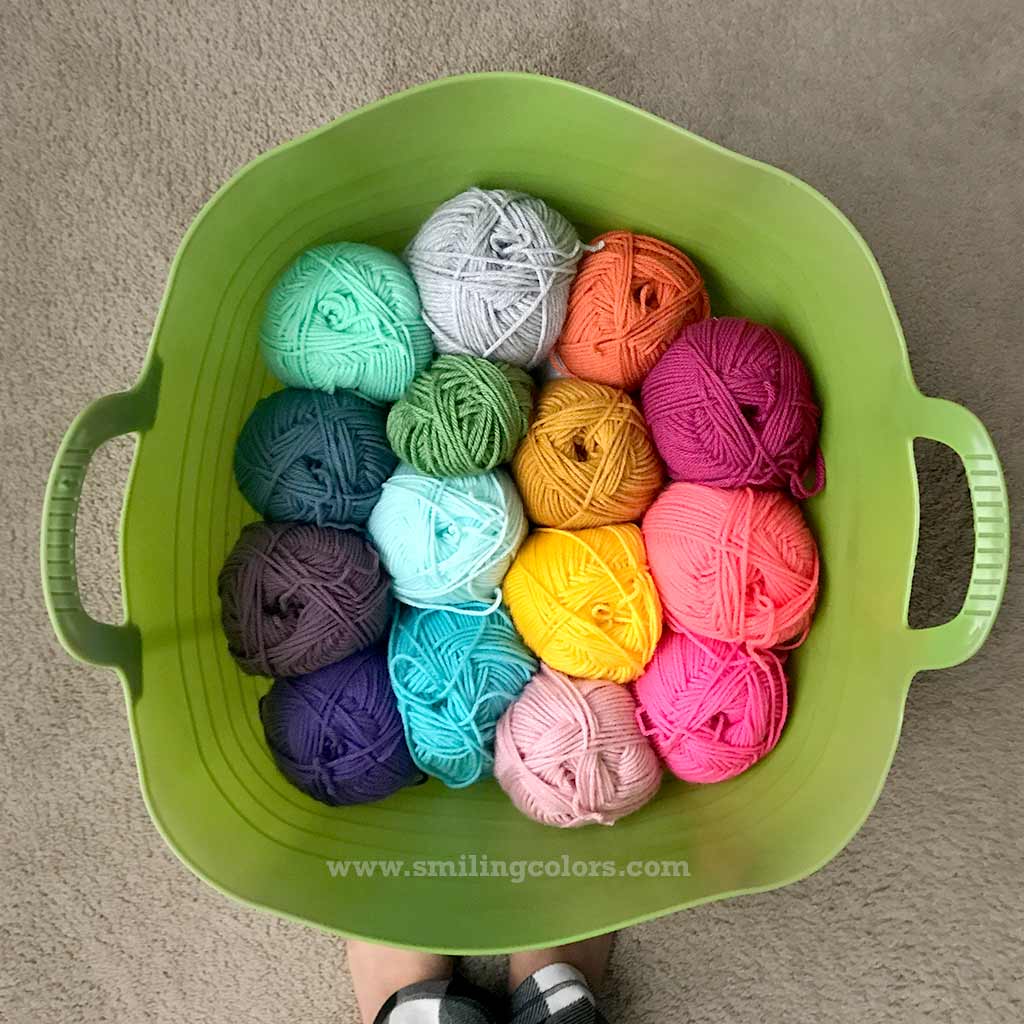
- What is your color scheme going to be? Oh the choices you have! I chose a rainbow scheme with a couple of extra teal colors- which are my favorite. I have seen so many great examples of muted, pastel, grey tone Temperature blankets too!
QUICK TIP: Create a small swatch of your blanket say 20 chains long, work 10 rows in the pattern you want for this Temperature Blanket. Measure how tall the 10 rows is in inches and multiply that by 3. That is how long your finished blanket will end up being in feet!
For example, on day 10 my blanket measured 2 inches tall, that means that my finished blanket will be 2 x 3 = 6 ft long!
Day by Day Blanket: How to Record Each Day
- Choose what to document: daily high temperature, low temperature, or even broader weather details (sunny, rainy, snowy, etc.). I chose to use the daily high temperature only.
- Each day you crochet: pick the yarn color that matches the daily temperature range from your chart, and work one row per day.
This simple rhythm — one row a day — makes the project manageable and even meditative.
temperature blanket color chart
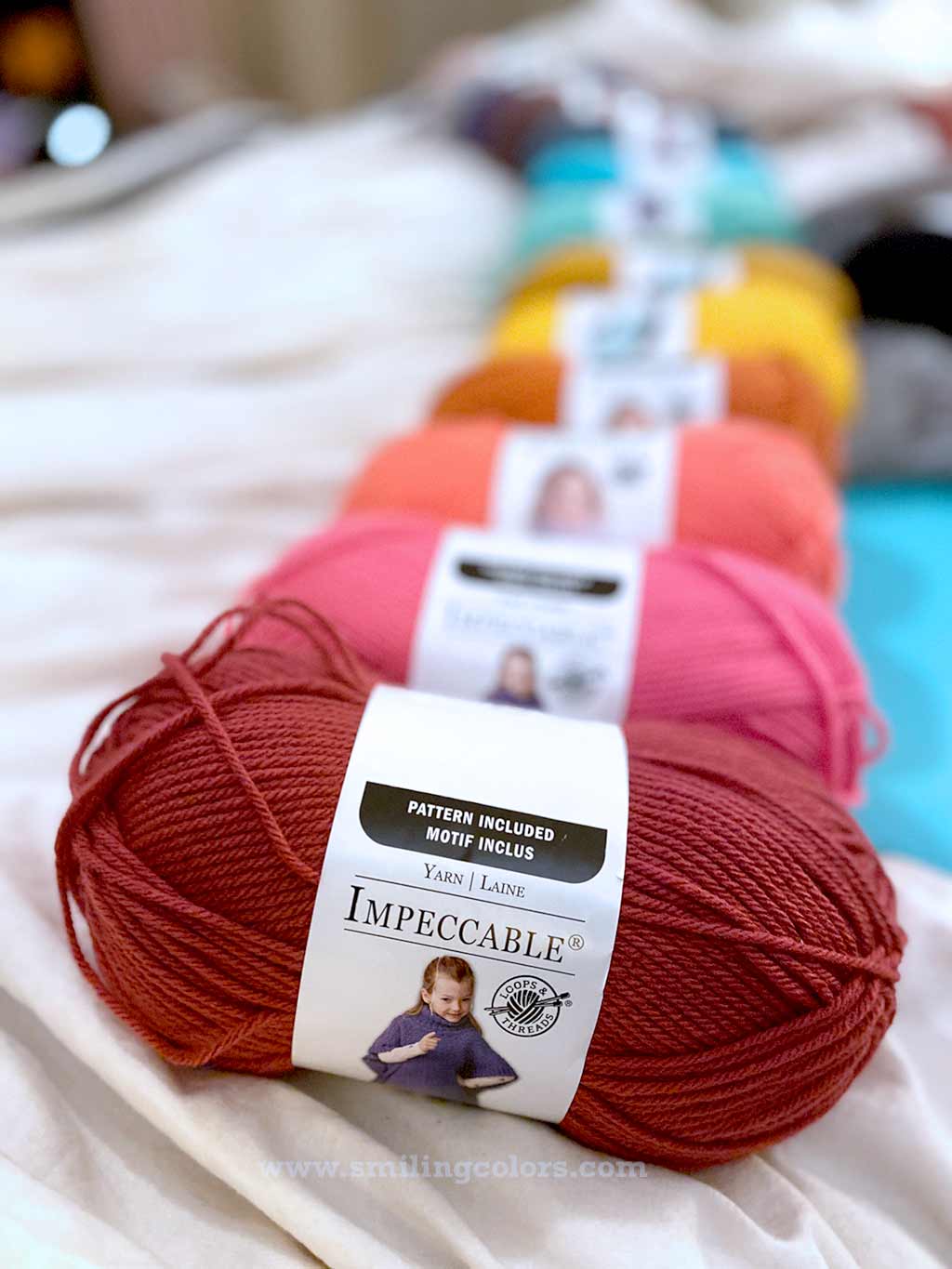
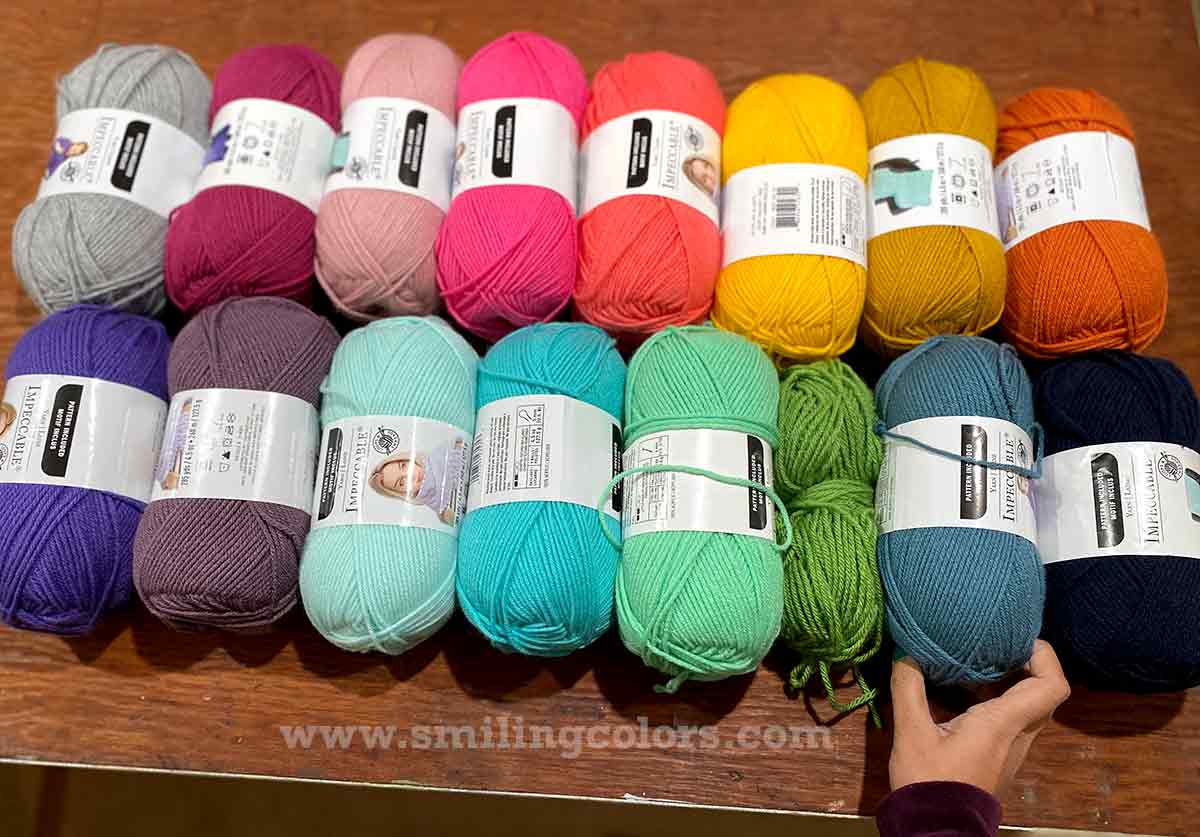
Below is a list of the colors of yarn and the temperature ranges I chose for them. Most of the yarns I am using for this blanket are Loops & Threads® Impeccable™ Yarn, Solid. This is an acrylic yarn, but you could use an acrylic wool mix yarn too.
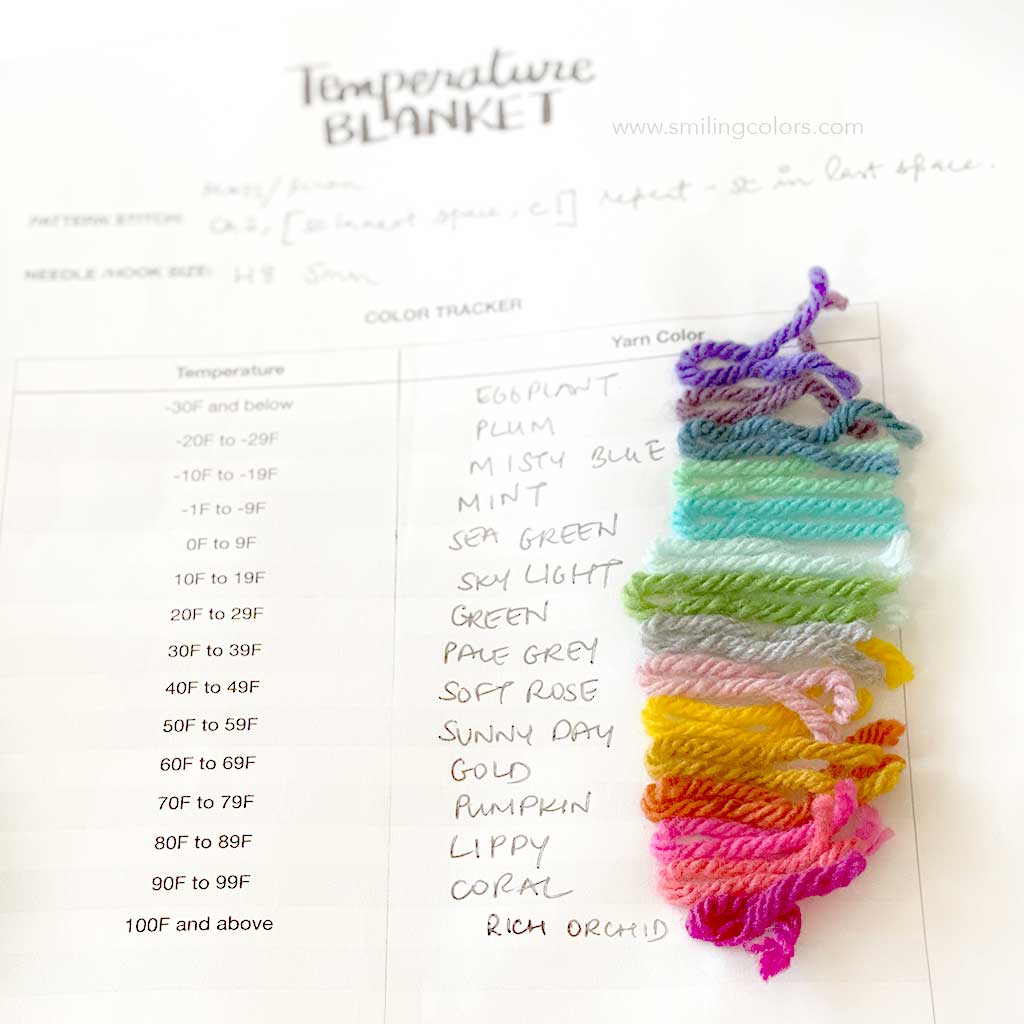
I’m using about 15 yarn colors with a 10-degree range for my Temperature Blanket. You can use the free color chart download or create a spreadsheet on your phone and track the colors too.
DOWNLOAD PDF HERE: Temperature Color Chart Tracker pdf
How much yarn do you need for a temperature blanket?
You will have to estimate how much yarn you will need- it all depends on the weather! You might need more of a certain color if the weather stalls, In general, I bought 2 skeins of yarn for popular colors and one skein for the rare temps.
Moss Stitch Temperature Blanket Pattern Pdf
Make sure to choose a stitch with short height. If you crocheting, a crochet moss stitch works great. If you are making a knitting project, make it a half linen stitch blanket.
NOTE: Stitching a row a day is probably the simplest of all Temperature blankets, You can also create other designs- like a basic granny square pattern a day, or a crochet hexagon a day and then join 366 blocks at the end of the year!
🧶 Moss Stitch Temperature Blanket Pattern
DOWNLOAD HERE: Moss Stitch Temp Blanket Pattern Pdf
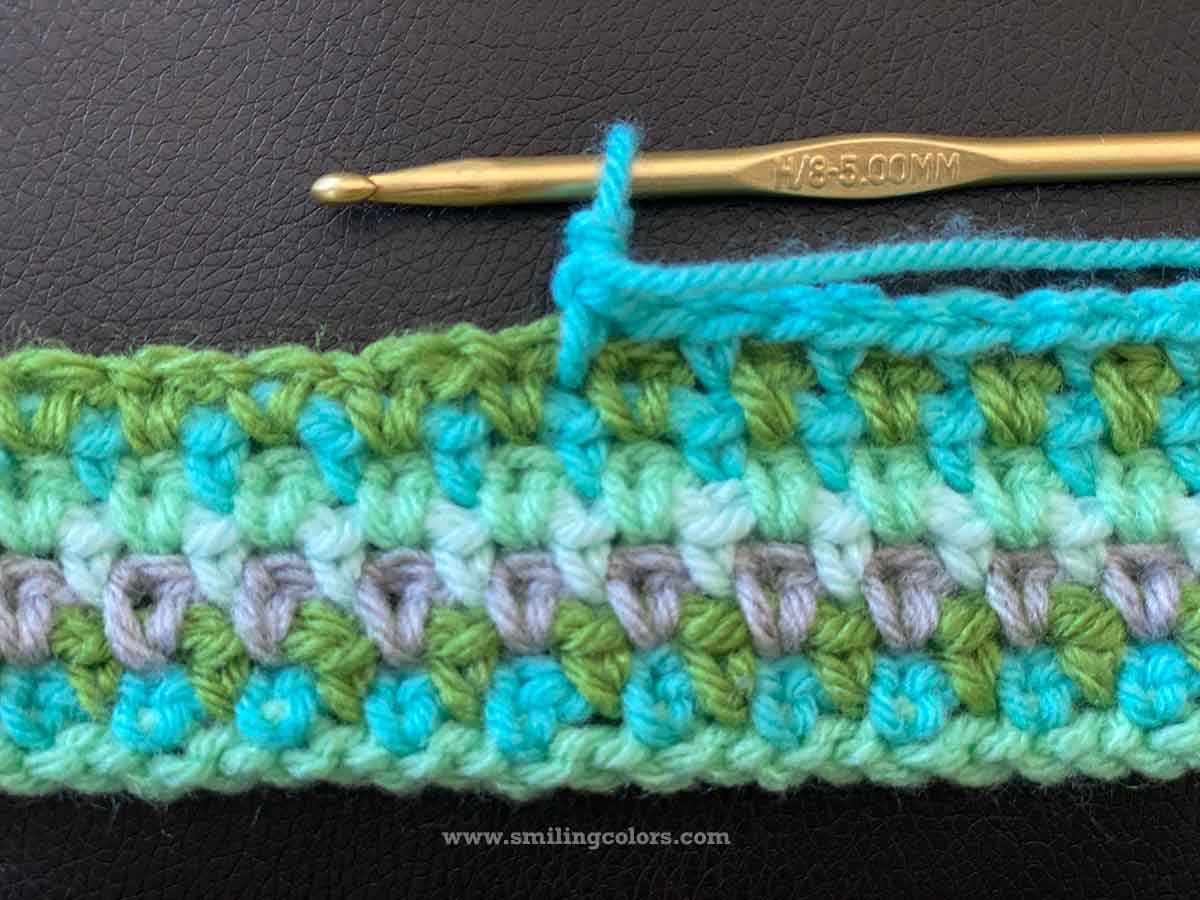
For my blanket, I am using the Moss Stitch, just like in my Moss Stitch Crochet Scarf. This stitch is also known as the linen/granite/moss stitch. The pattern goes as follows:
- Hook: H / 5 mm
- Chain: Make a chain the width you need. Here is a helpful how to start chain crochet beginner video
- Foundation row: Single crochet (sc) in 2nd chain from hook, then ch 1, skip 1, sc in next, repeat to end, then turn. Here is a helpful video on how to single crochet for beginners video
- Pattern row: Ch 2, then sc in next space, ch 1 repeat to last space, sc in last space, turn.
Repeat the pattern row daily in the color that corresponds to the temperature of the day.
This stitch stays flat, builds a lovely texture, and keeps the blanket manageable in size.
How many chains to start a temperature blanket?
This one needs a little bit of math. If you are using a medium 4 thickness yarn, and getting 4 rows to an inch you will need approximately 350 chains to make a square blanket of 365 rows.
To make more of a rectangle blanket, start with a foundation chain of about 225 to 250 chains.
NOTE: If you start with a short foundation chain, your blanket will end up being skinny and tall and not wide enough for even one person to use. So make sure to check your gauge!
If you have started the project, and feel that your blanket seems skinny midway- simply create two panels and join them together to form one big blanket. So you would work with a row a day from Jan to Jun and then start another blanket for July to Dec and join them both!
Mistakes I made in my Temperature Blanket (and how to fix them!)
Let’s start at the beginning and I’m going to take you along my progress month by month and show you the issues that I had not envisioned- and hopefully you will be able to benefit from my mistakes!
Friends, this Temperature Blanket of mine has been a lesson in patience and love for me. I have had to change course so many times since I started and I really didn’t know how to add all this info into this blog post, so I apologize in advance for the length of this post.
January, I started my Temperature blanket with my above color chart of 15 beautiful rainbow colors. I had a new color for every 9 degrees and my colors went from -30F to 100F +. I crocheted a row a day and was at 30 rows tall. I shared all of this on Instagram as I went and it was so much fun to see everyone’s blanket progress along.
MISTAKE 1: Gauge miscalculation: At the end of January, I was 1/12 of the way through with my blanket and when measured it was about 6.5 inches tall. If I multiplied that by 12, my finished blanket estimate would be 12 x 6.5 =78 inches tall. But with my 200 stitches cast on, the blanket was barely 45 inches wide. My blanket needed to be wider.
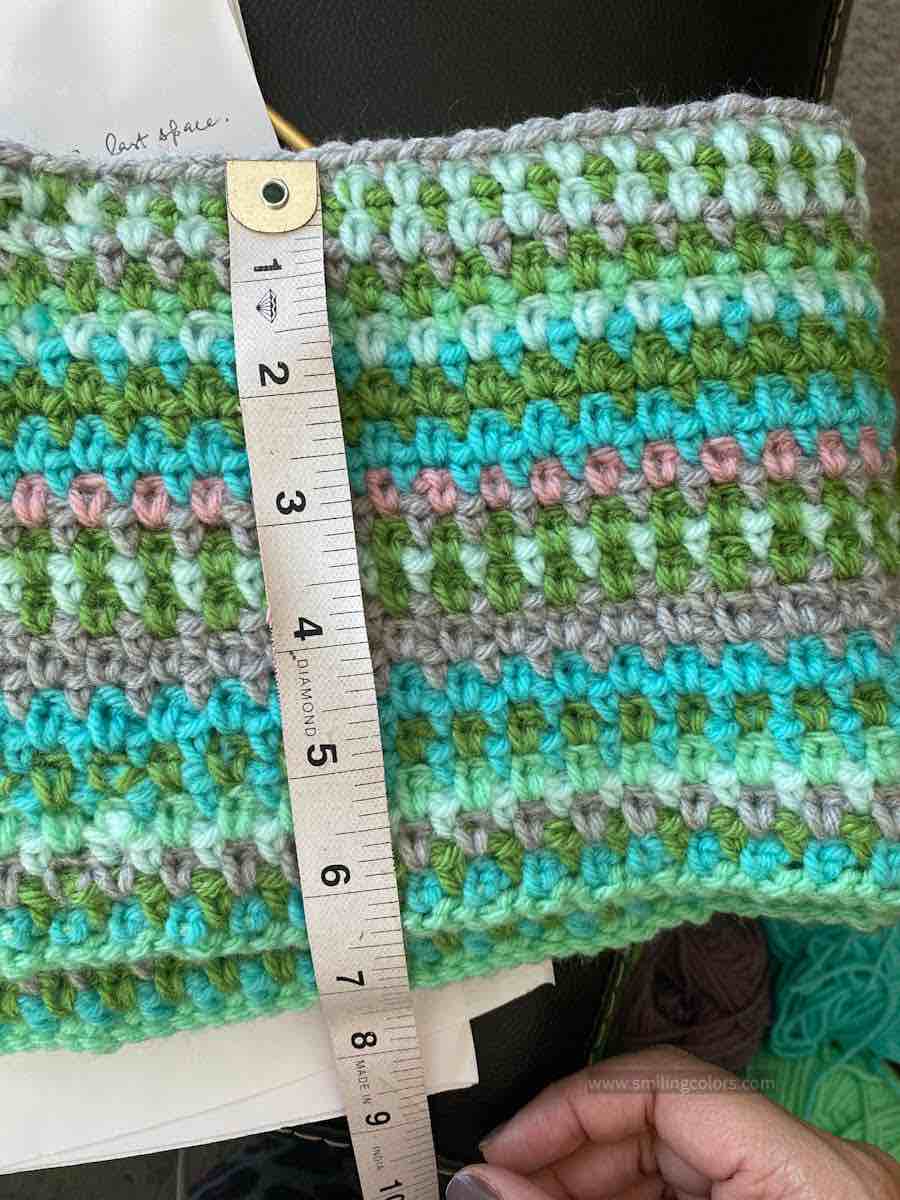
February, I am overthinking my blanket and whether I should rip it out and restart with a longer foundation chain. At the same time, I took a minute to put down my blanket and observe. The edges were not straight anymore, and I was just using the same blues and teals and for some reason there is a lot of green but NO purple or dark blue at all!
MISTAKE 2: Dropped / missed stitches during color changes: While growing my Temperature Blanket I had somehow lost stitches. I am not a beginner crocheter, and have many scarves and blanket experience. Dropping stitches/ missing stitches while turning is not something I do. BUT this time, I was paying too much attention to changing the color + weaving in the color changes as I went. And then one day I pick up my blanket and saw I no longer had a straight side to the blanket! What a bummer.
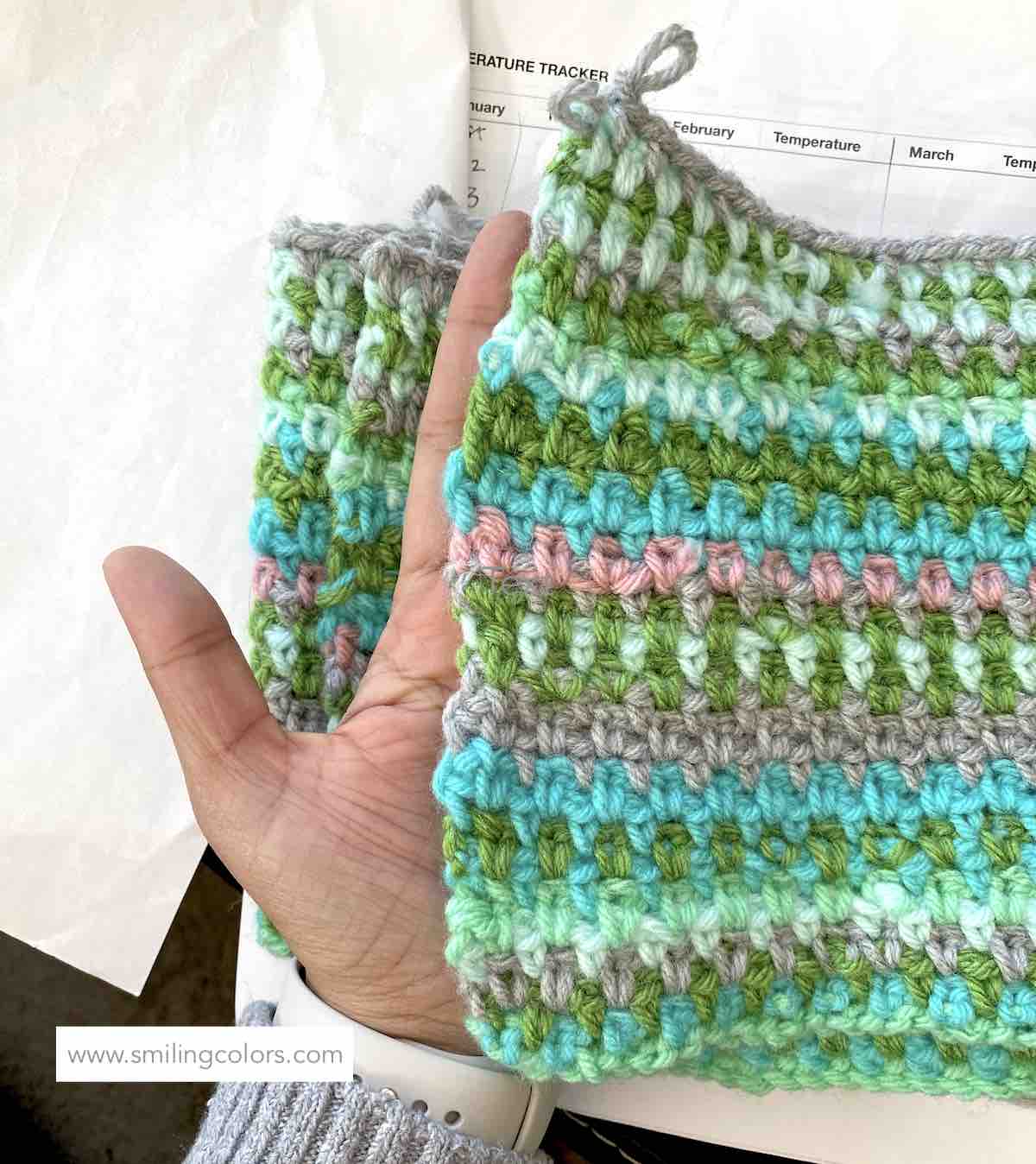
MISTAKE 3: Color chart too wide for the climate: I had made my color chart from -30F! Yes, I live in Minnesota, but the daily HIGHs never go that low. When making my color chart I had taken into consideration both the daily lows and highs (face palm) – I should have ONLY focussed on the daily high temperatures as that is what I am documenting. And the daily high rarely falls below 0F so I basically had wasted my first 3 colors.
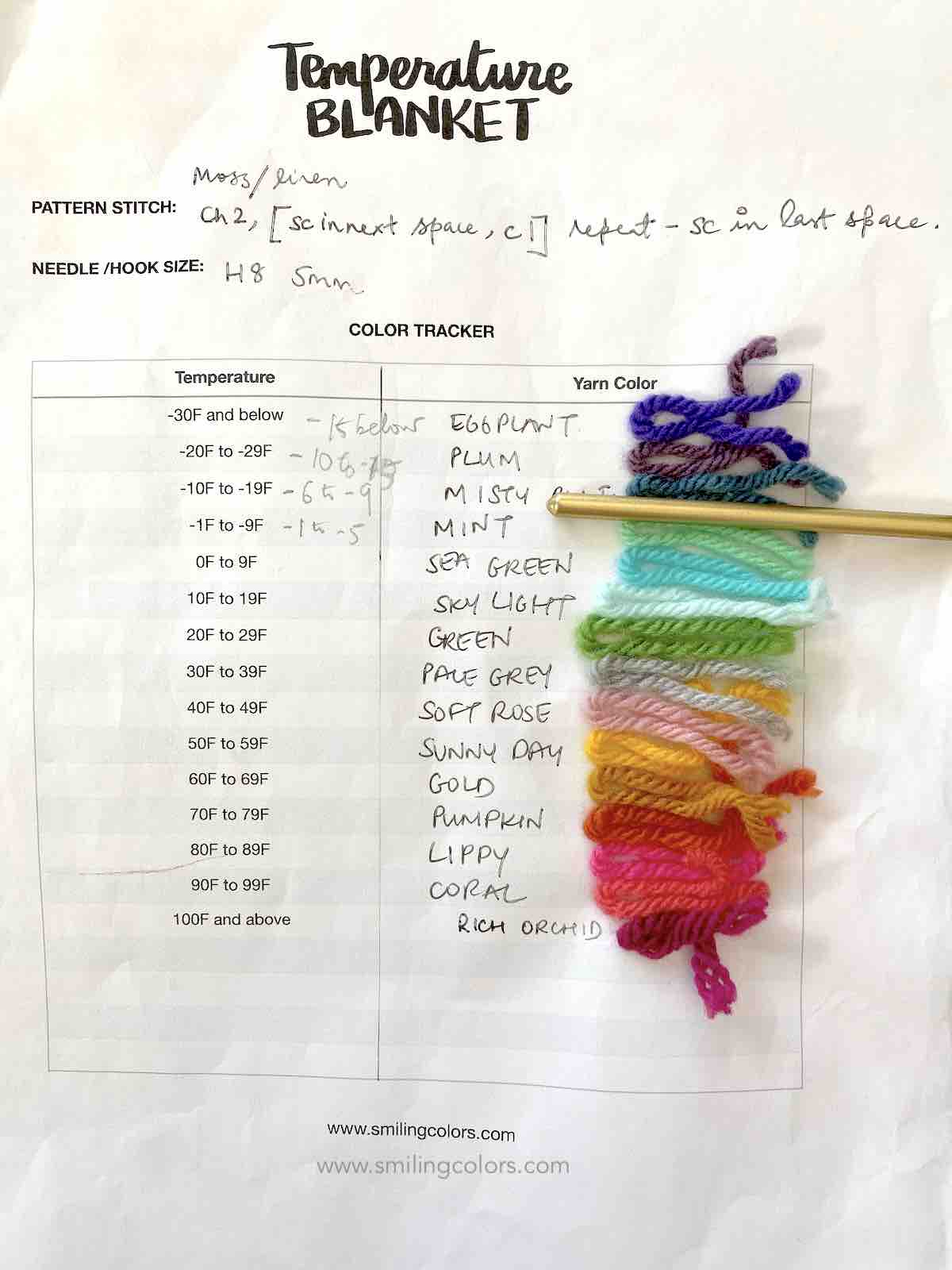
So now we are in mid February and here is how I fixed those mistakes:
- Restarted the blanket with more chains: I started a new blanket (did not frog- I loved the colors of what I had created, and saved it to be used as a scarf) and this time I changed my starting chain to 264. I decided to start fresh so that I would have a blanket that I love and since it was still early in the year hopefully, it would be doable.
- Recalibrated the colors: I eliminated a few colors, double checked the approximate daily high temperature of my area and recreated a new Temperature Blanket Color Chart (spoiler alert- I change the colors again, more later)
- Paid attention to those turning chains: This time I ensured that every time I turned the blanket was not losing stitches.
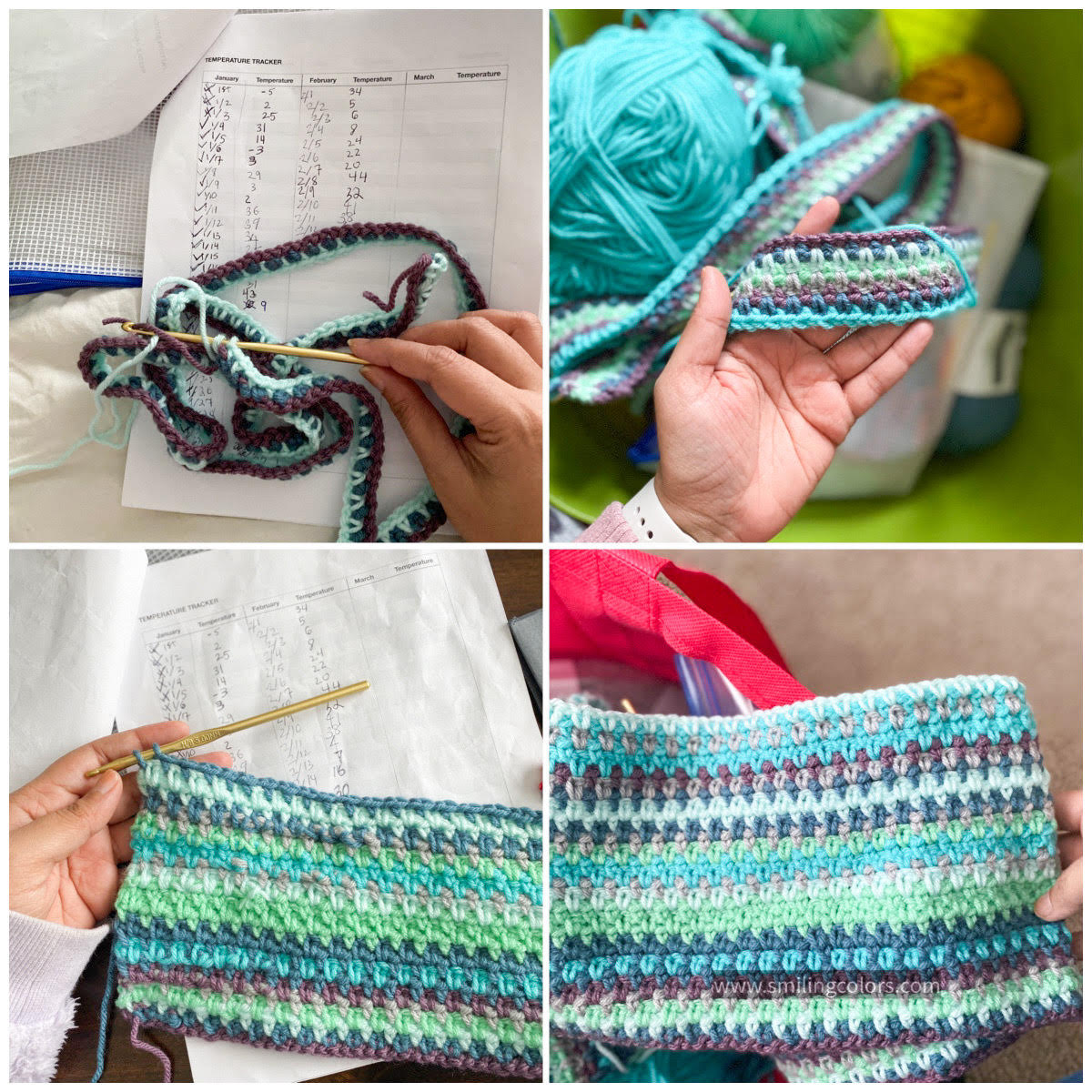
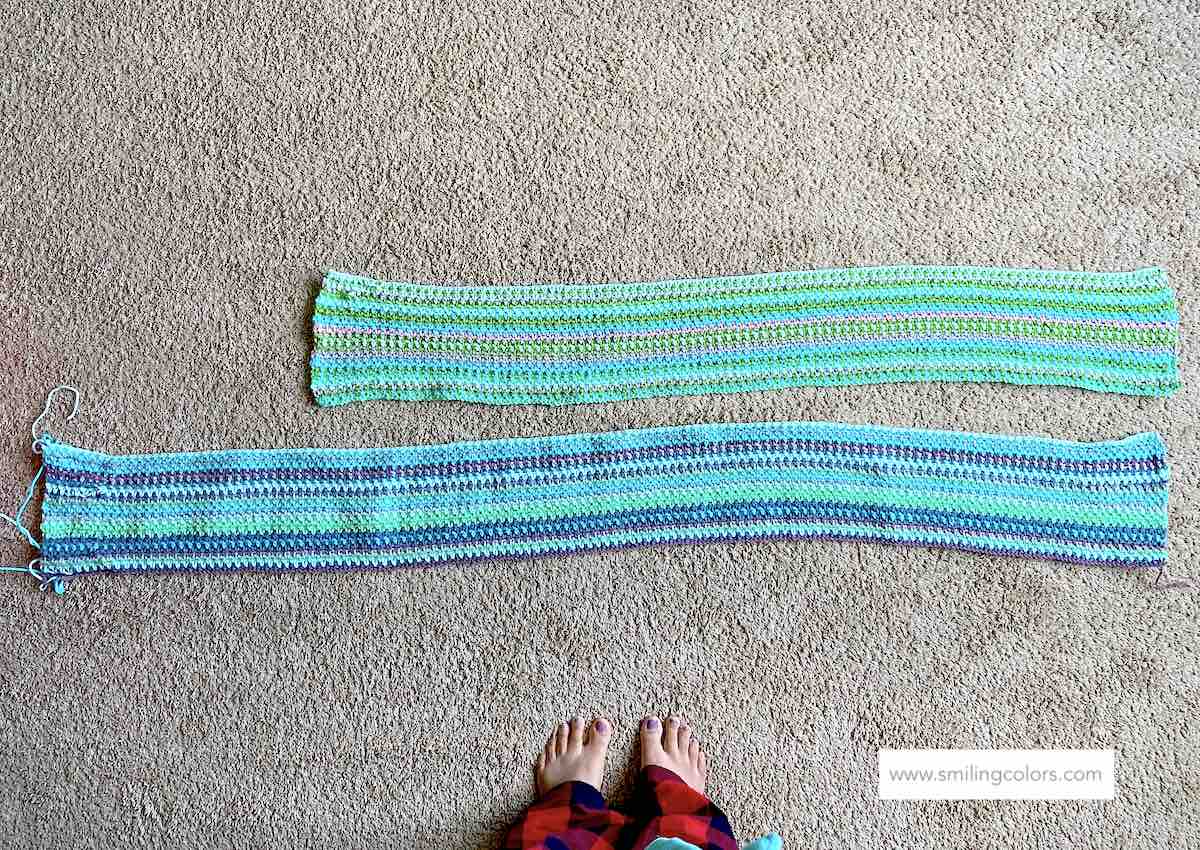
And then at the end of February, we had to suddenly travel to India to due to my Mother in laws sudden and extremely sad demise. Within 24 hours we booked our tickets and were on an international flight. We stayed there for more than a month and it was a really emotional time.
During the entire month of March, we were grieving so hard, but I also was so amazed that it was this year I chose to start my first ever Temperature Blanket project.
This blanket would now be made in memory of my Mother in law and will forever serve as great hug for my kids.
But now, I had a new question.
“Do you document Temperatures where you live or where you to travel to in your Temperature Blanket?”
There is no right answer- the choice is yours here. On long plane layovers, my husband, daughters and I discussed this question a lot. We decided as a family that we wanted the scorching hot days of Hyderabad documented into the blanket- because that were the temperatures we had lived through. Hyderabad had gone through an unprecedented heat wave during our stay and the daily high temps had been 106F for days.
April, we were back home in Minnesota. I slowly started catching up with my blanket. The blanket is wide now with 250+ chains and each row takes a good amount time. My goal was to do 2 or 3 rows a day to play catch up, but with my Mom also visiting and staying with us, it was difficult to find time and honestly this blanket was not at the top of my priorities. Life happened.
I was still progressing with my blanket, but very slowly. At the end of the month of May, I again had to go to my Temperature Blanket Color Chart and this time added a black for the hottest temperature that I had not anticipated. I started slowly working on my blanket only to realize I did not like the black, hot pink and coral colors together at all.
What to do if you don’t like a color you’ve chosen?
I debated again for a few days, because I was already so BEHIND on this blanket, but then eventually ripped out the rows and recalibrated the colors. I wanted this blanket to be something that lasts for years and the black simply was not working. I really was not liking the pink and coral together either.
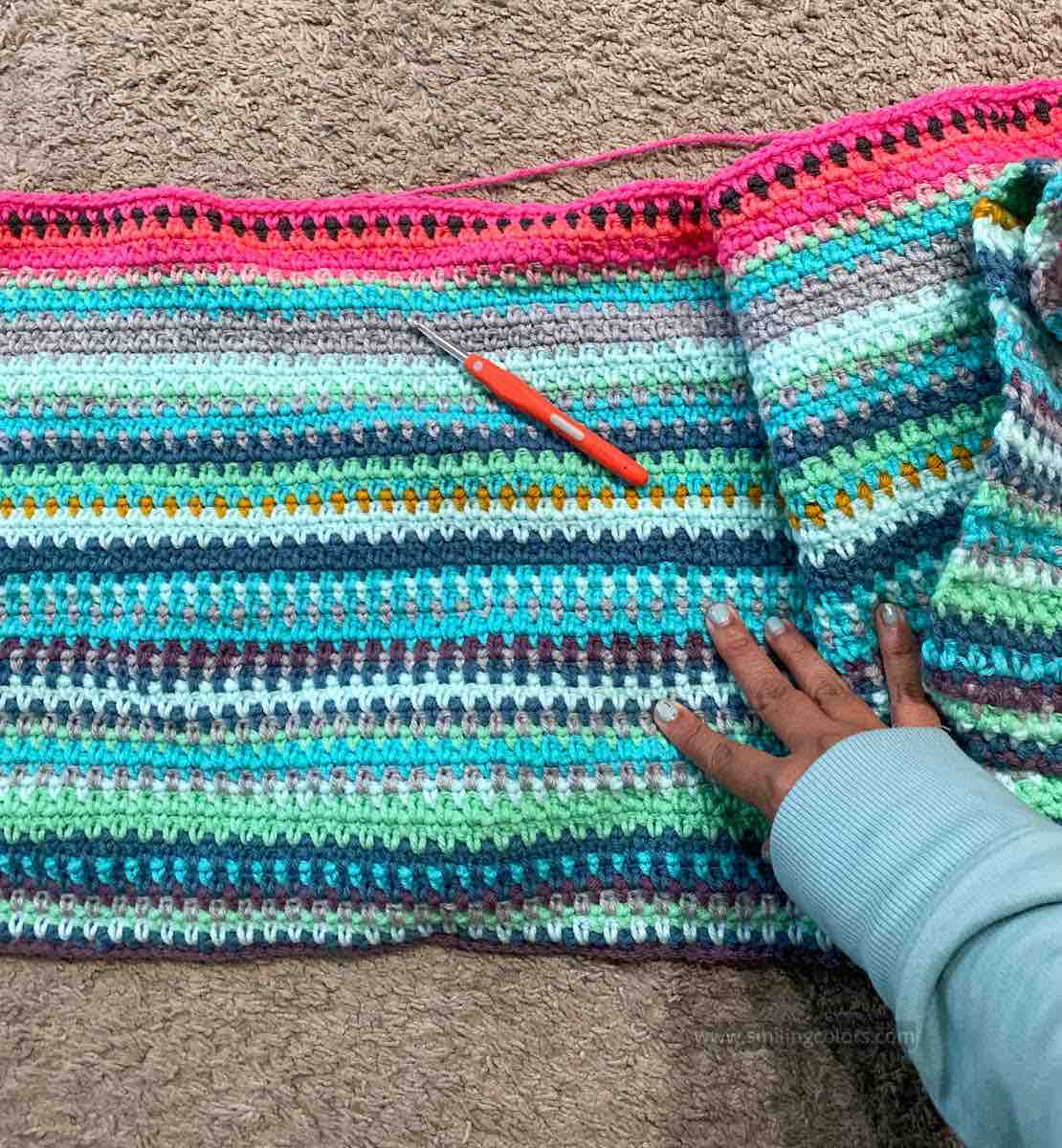
Because the black was not a color that looked well with the others I had, I chose a neutral cream to break the color and mark days of white heat instead. I eliminated the hot pink (lippy) color completely, because it did not look good with the coral at all and redid the 80F + temperature range. At last I had my FINAL Temperature Blanket Color Chart.


I ripped out the blacks and corals and redid rows in the new color scheme, and now I am loving this Temperature Blanket!
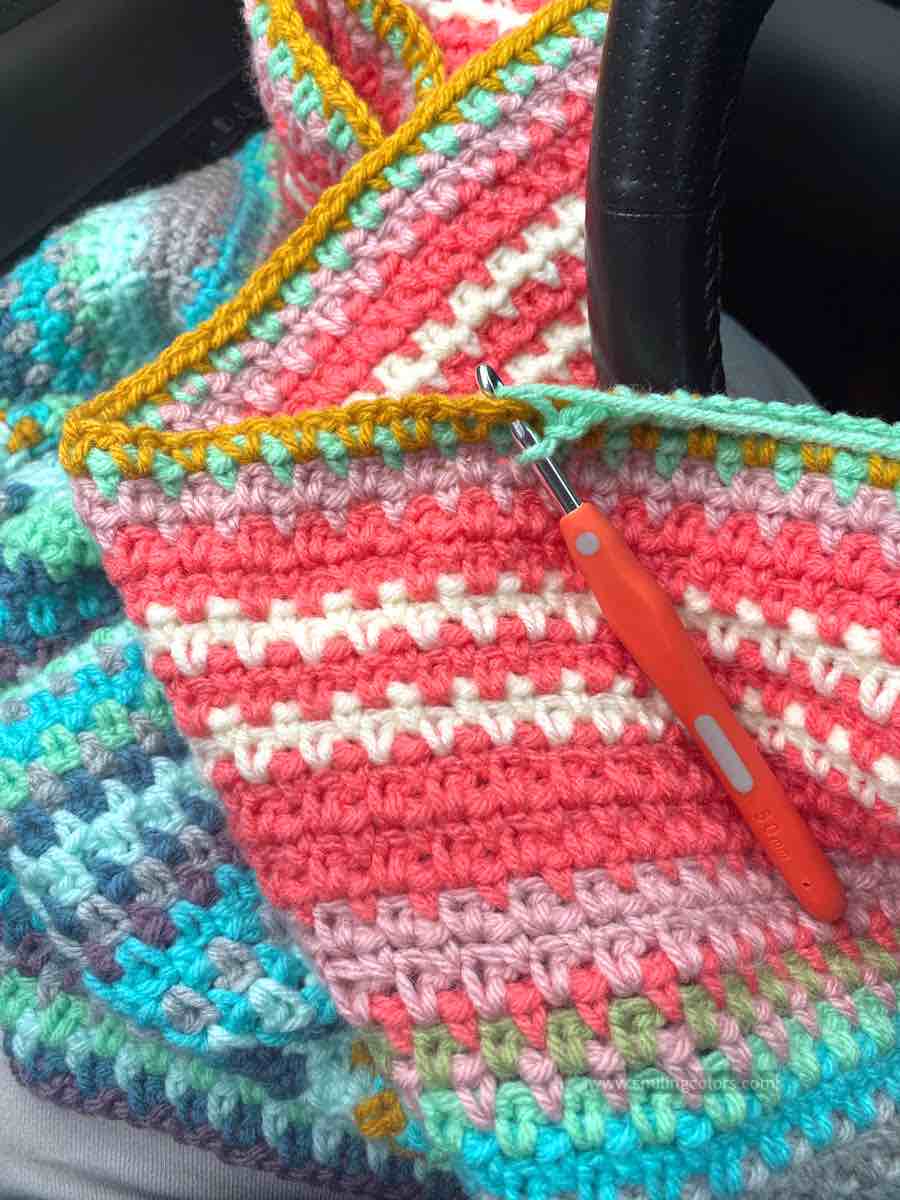
June, the blanket is progressing along nicely with a soft pink, coral, and cream section to mark our Hyderabad days. Yes, it is June and I am working on March. School has ended, and we had a few road trips planned. I took my blanket with me with good intentions, but the reality was that I never really got to work on the Temperature Blanket during the vacations. It was really too hot to work on the blanket, and my mom was still visiting and the days were busy.
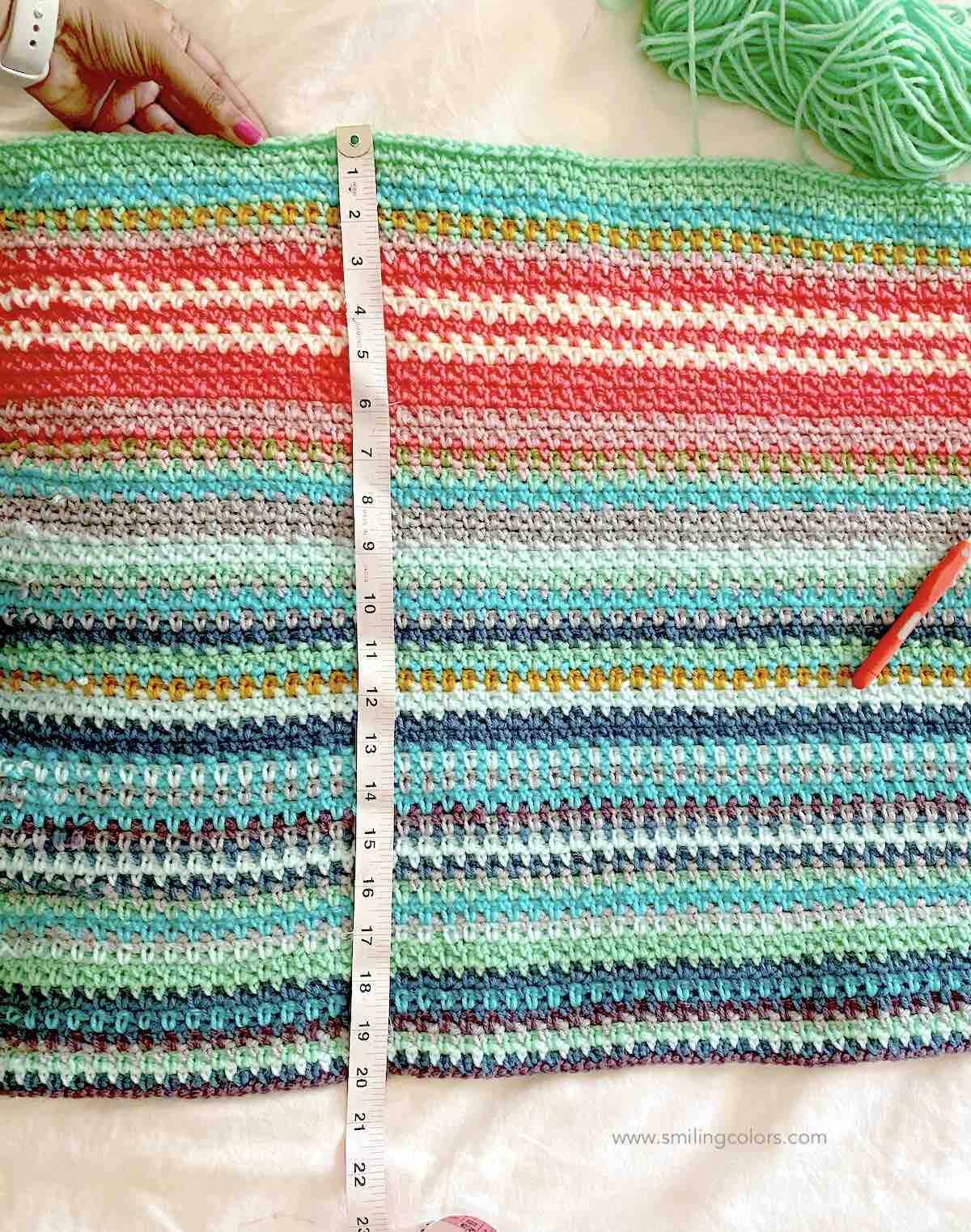
October. Yes, October, since I shelved this project till after my mom went back to India. And then I slowly started progressing. I took my blanket to a Crochet meet at the Mall of America, and met so many amazing crocheters and they were all so kind and enthusiastic about my project. I was excited to crochet again.
November. I’ve caught up with my blanket till June, and all the summery yellows are so pretty and beautiful! This blanket surprises you with the colors and keeps it so intersting!
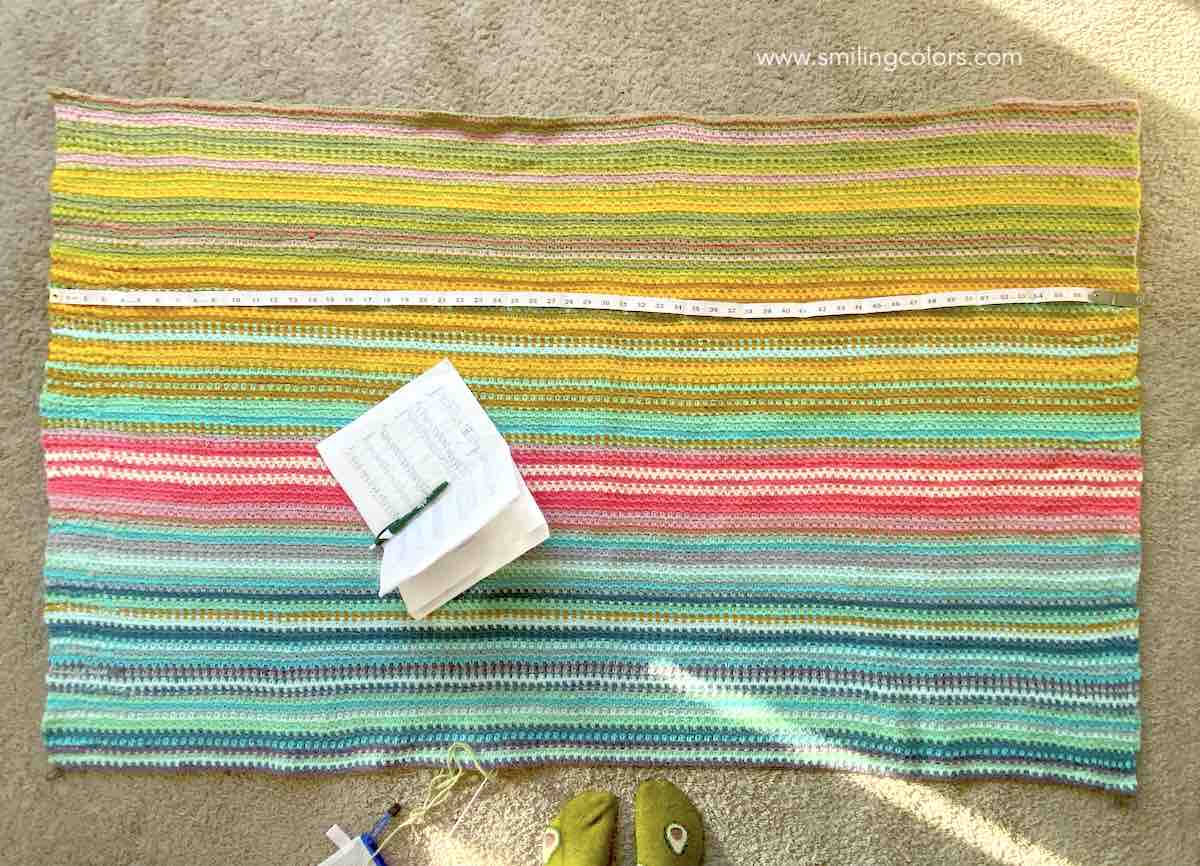
December, I’ve finished my blanket up to June, and just starting July! Half way done and the blanket measures roughly 60 inches wide and 44 inches tall. So the finished blanket will probably be about 60 by 88 inches!
January (of the new year), I’m starting September! Three quarters of the way done and this project has gained momentum and is chugging along quickly.
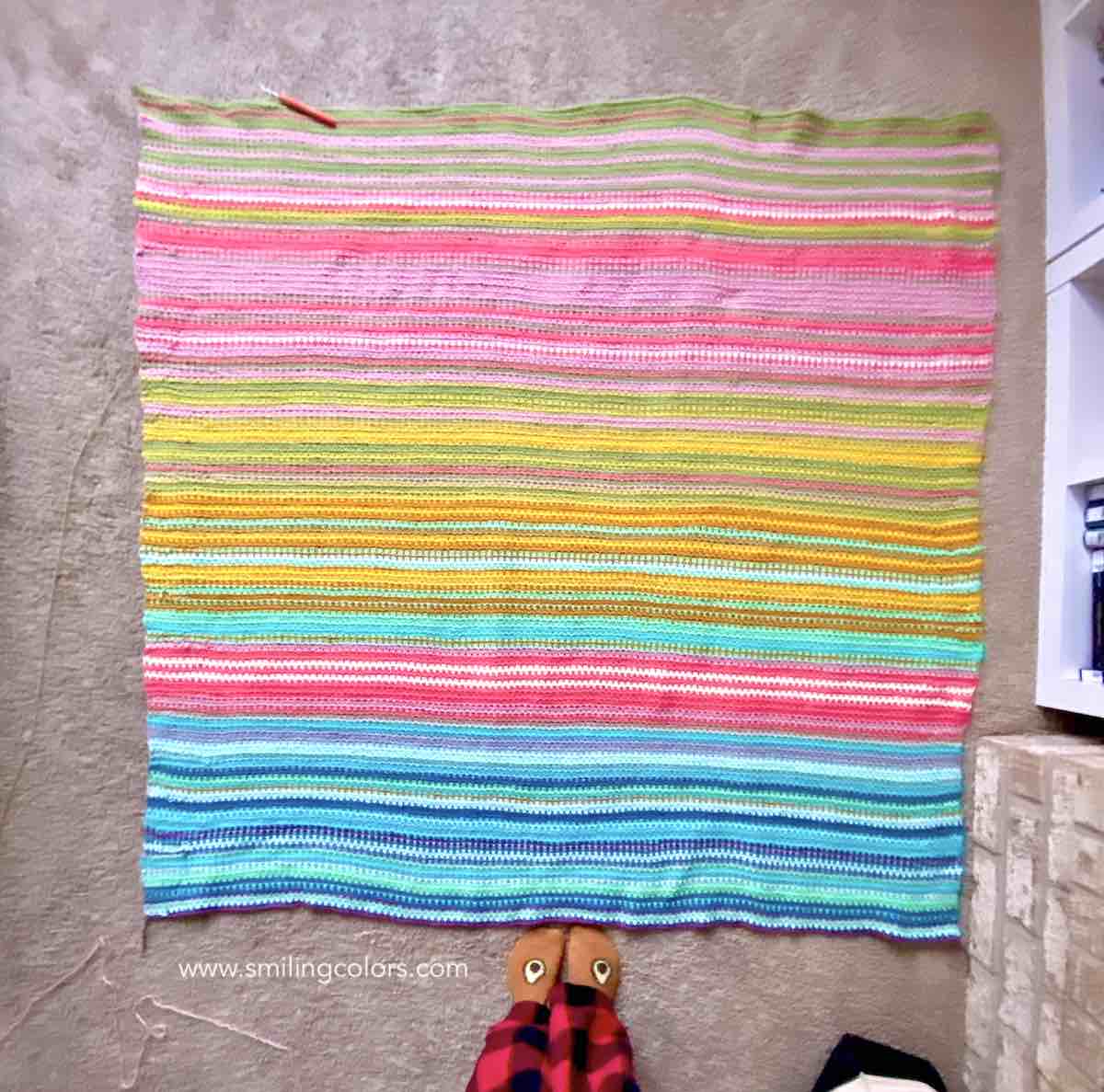
End of January. I just started December, and the end is near! We are back to the blues and cool colors
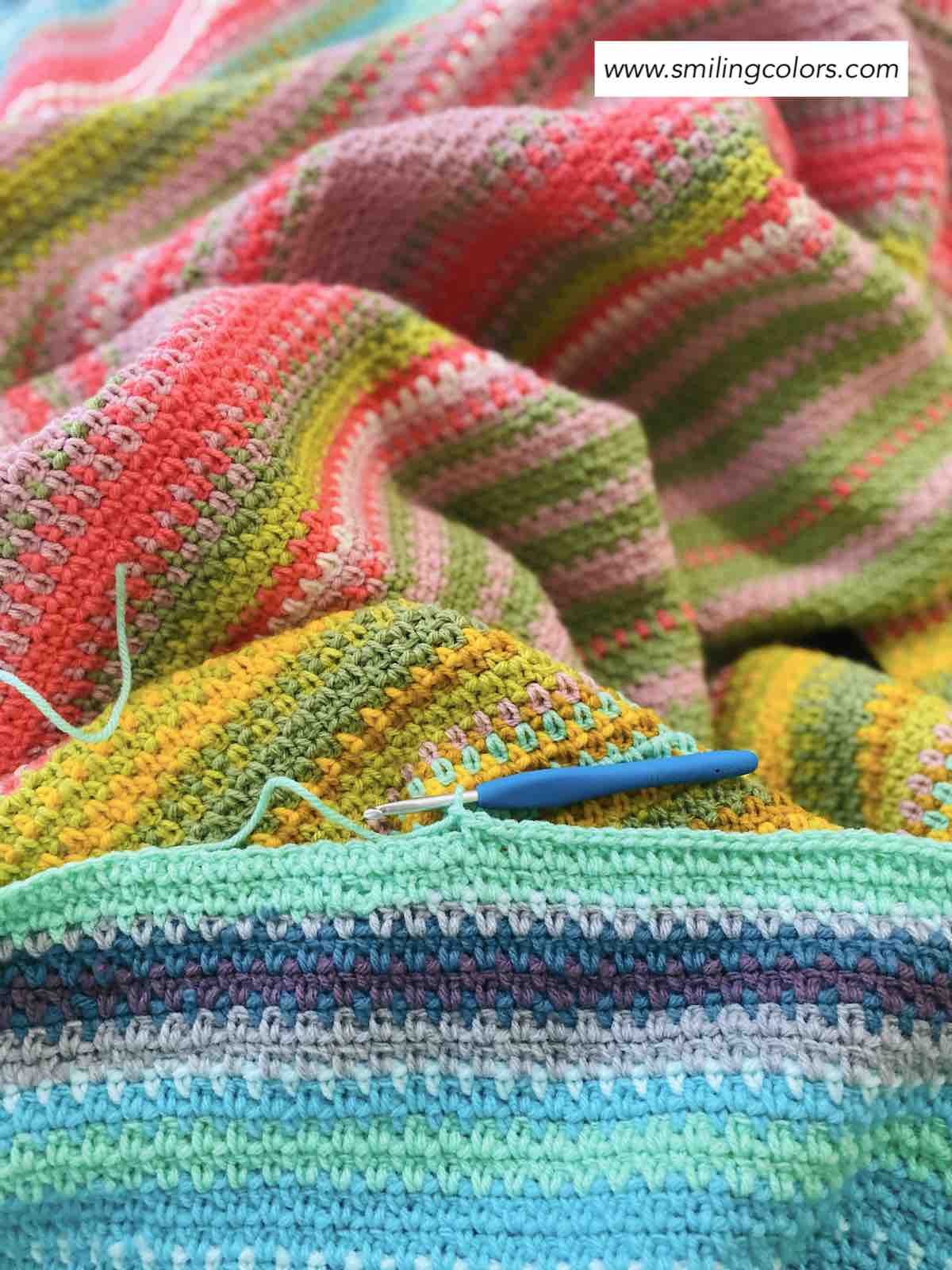
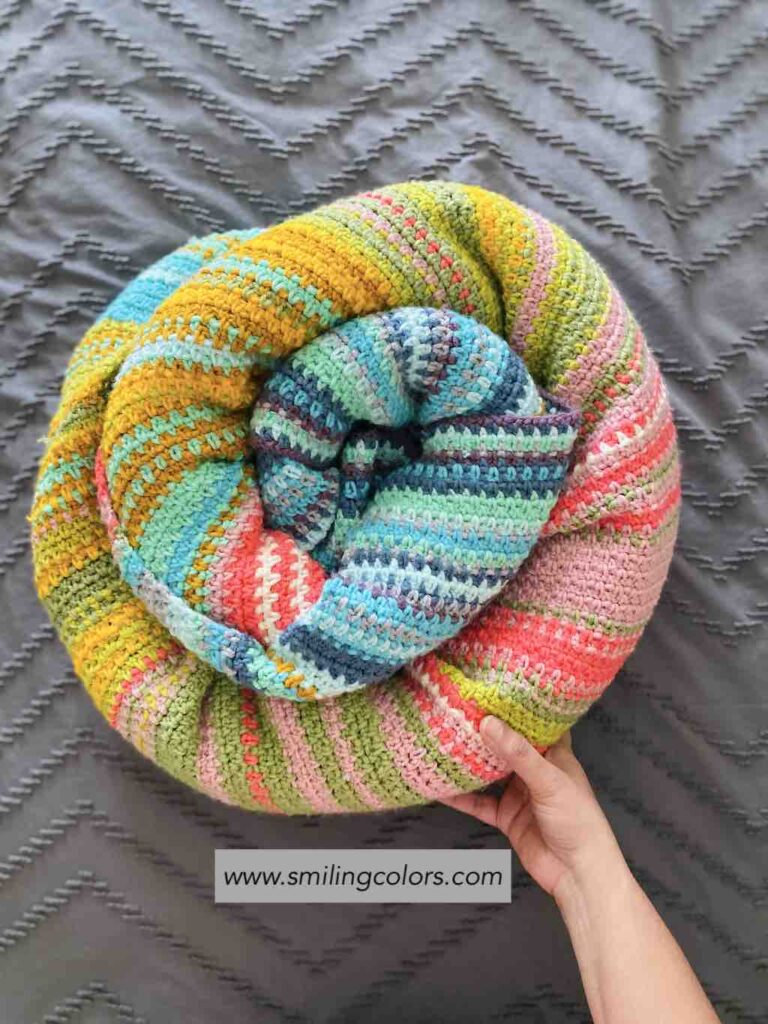
I finished my blanket in the month of February and immediately missed having it as my crochet project buddy. This has to be the best blanket I have ever made, and that is saying something since I have been sharing free crochet blanket patterns for a long time now.
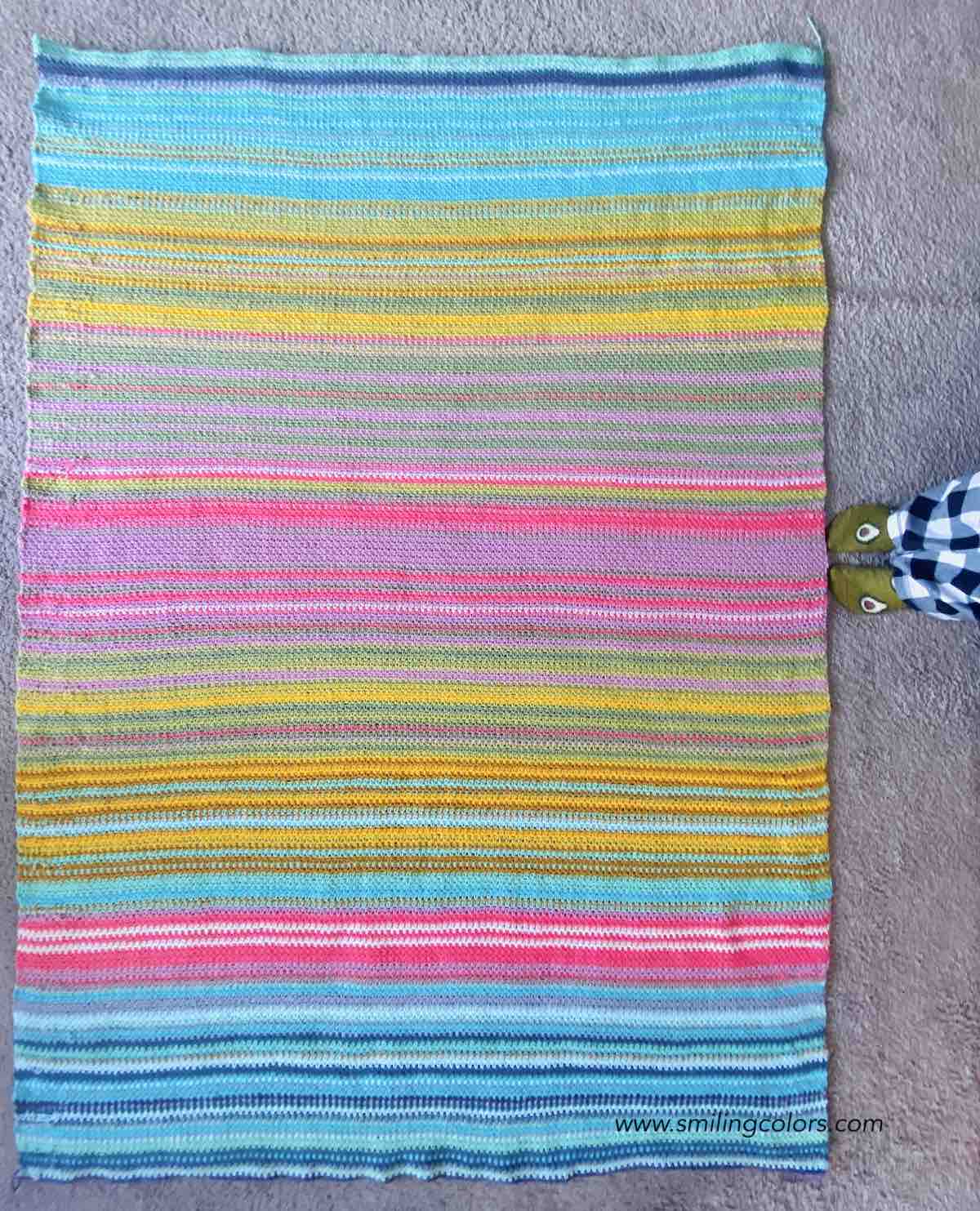
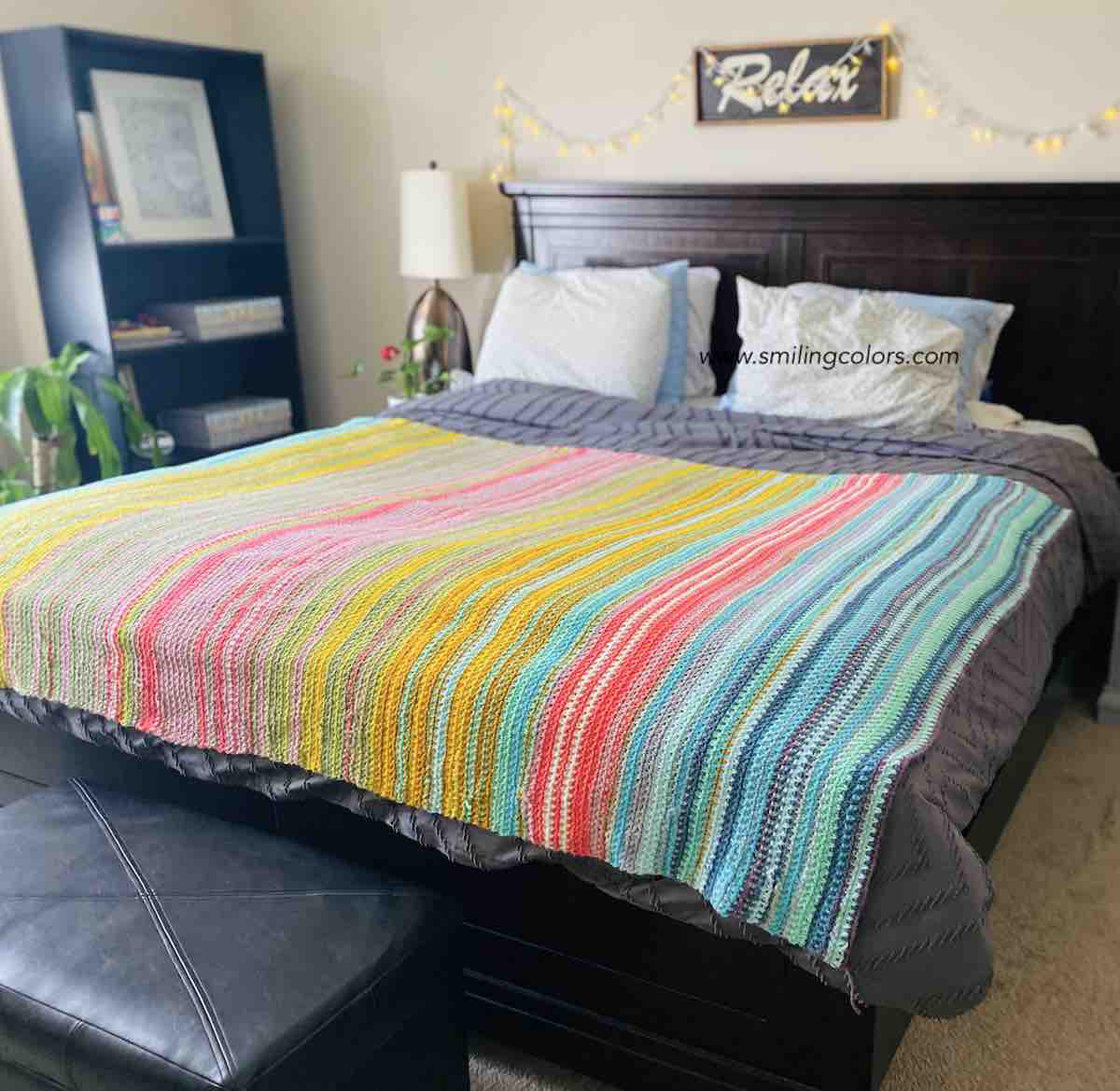
My finished Temperature Blanket!
It was a cold February day but that did not stop us from taking a few photos outside too
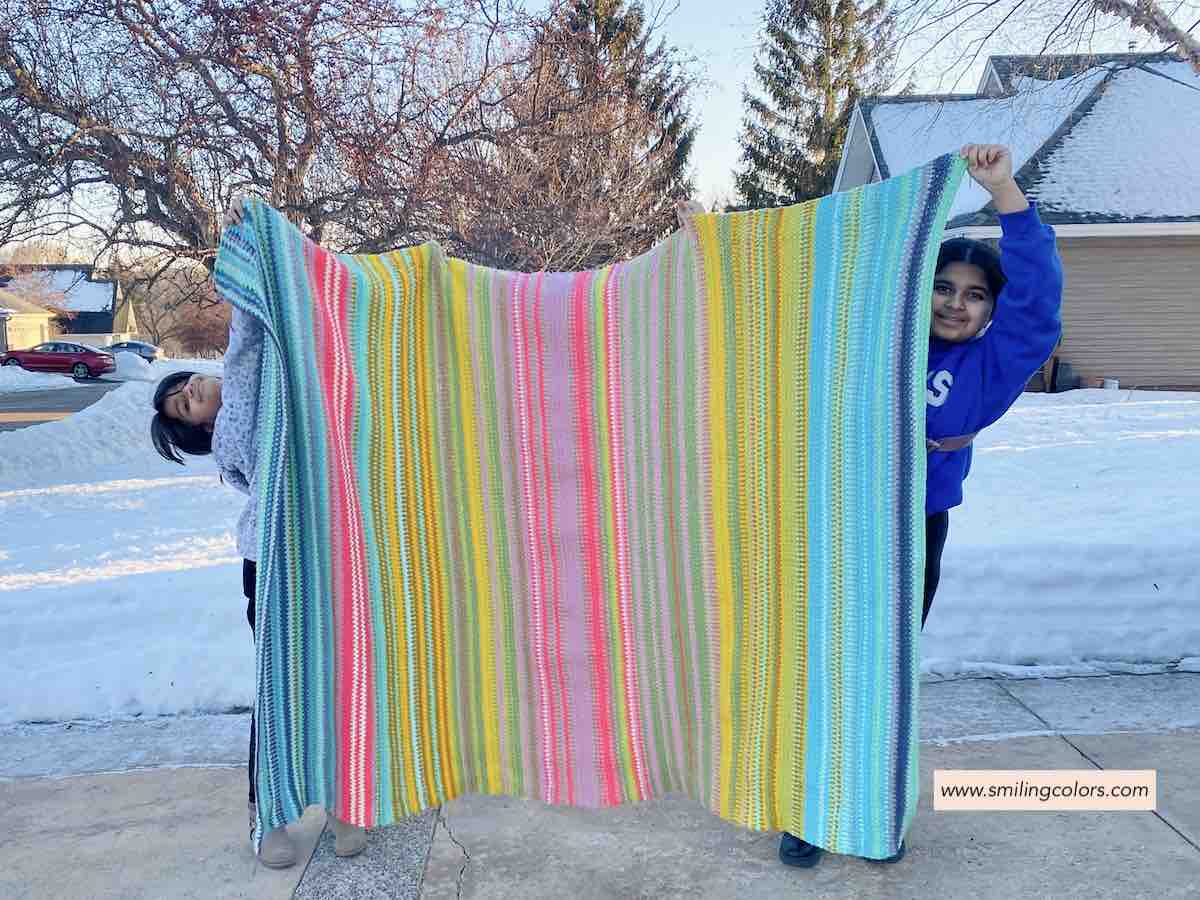
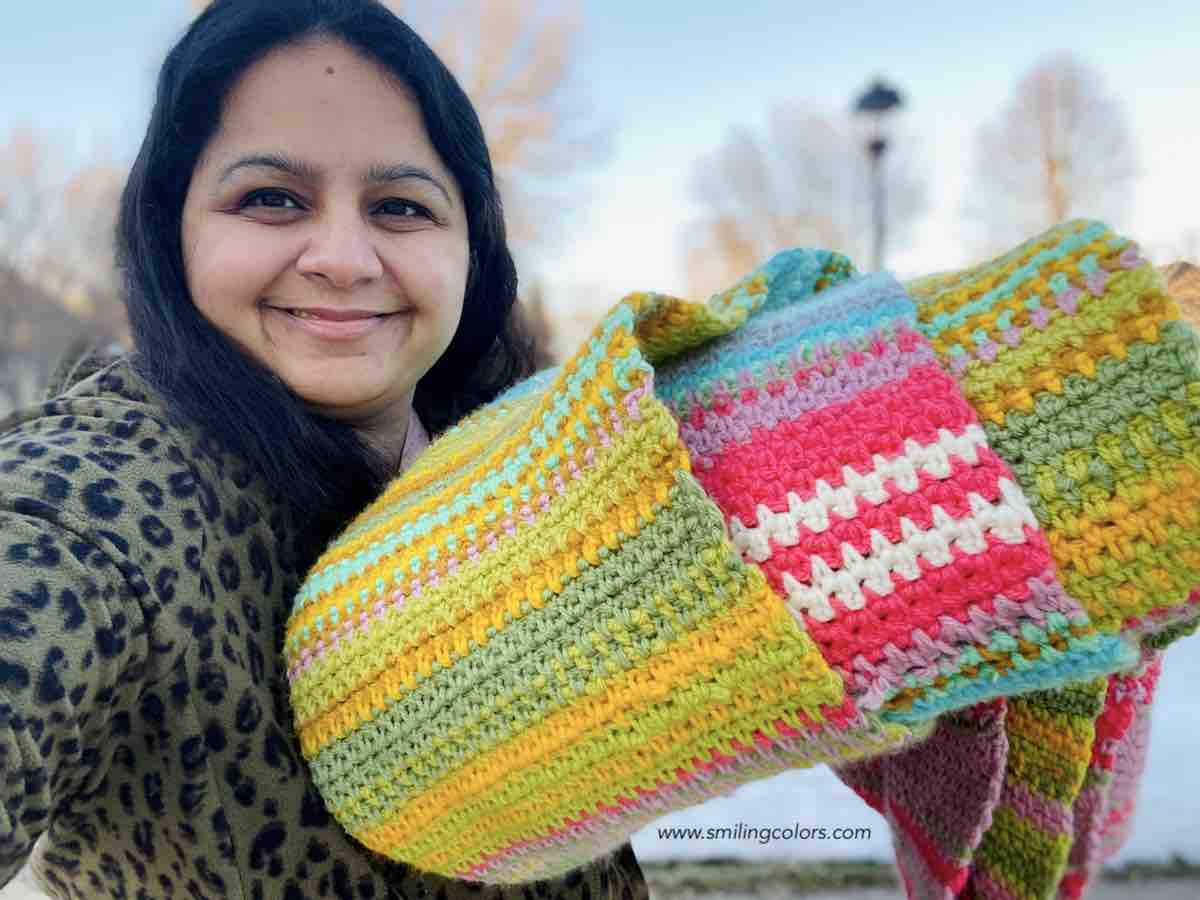
I am beyond thrilled to be finally sharing my finished Temperature Blanket with you all!
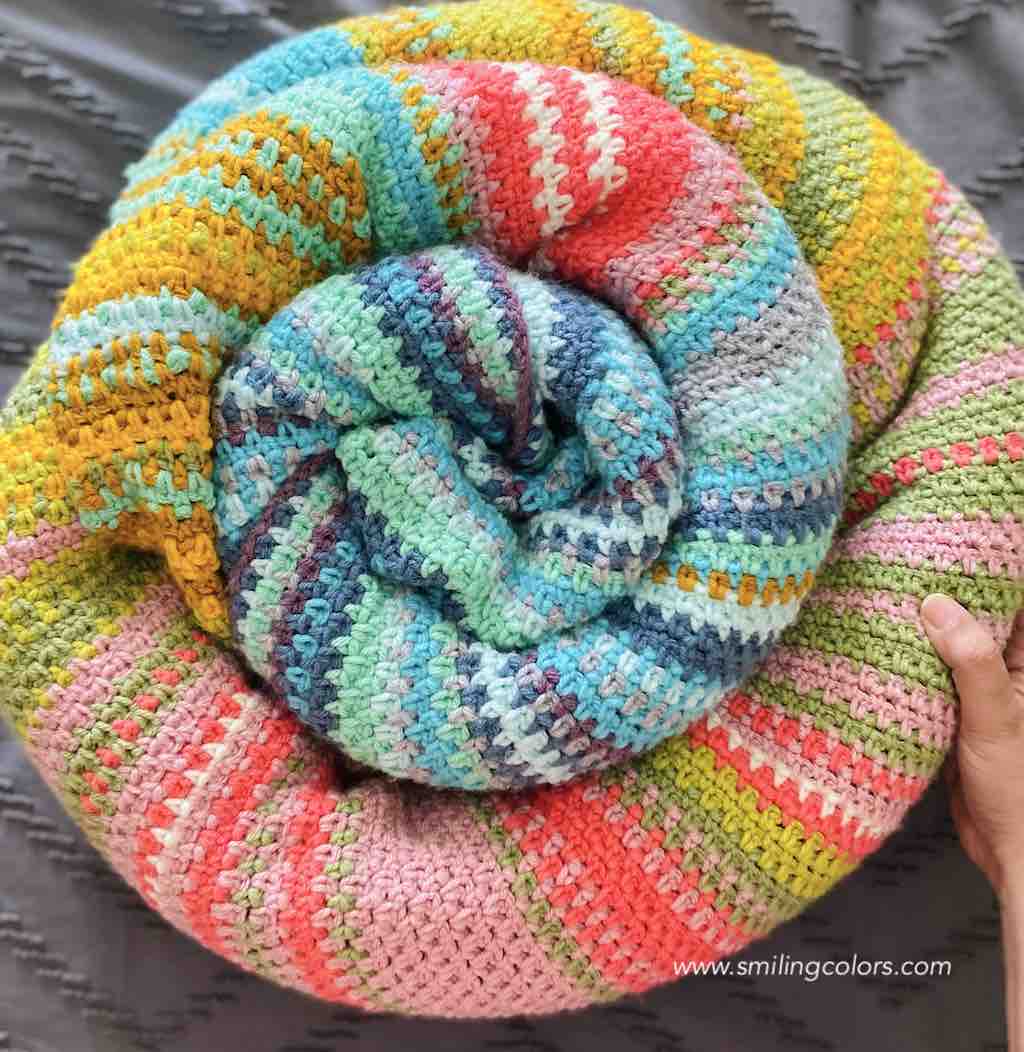
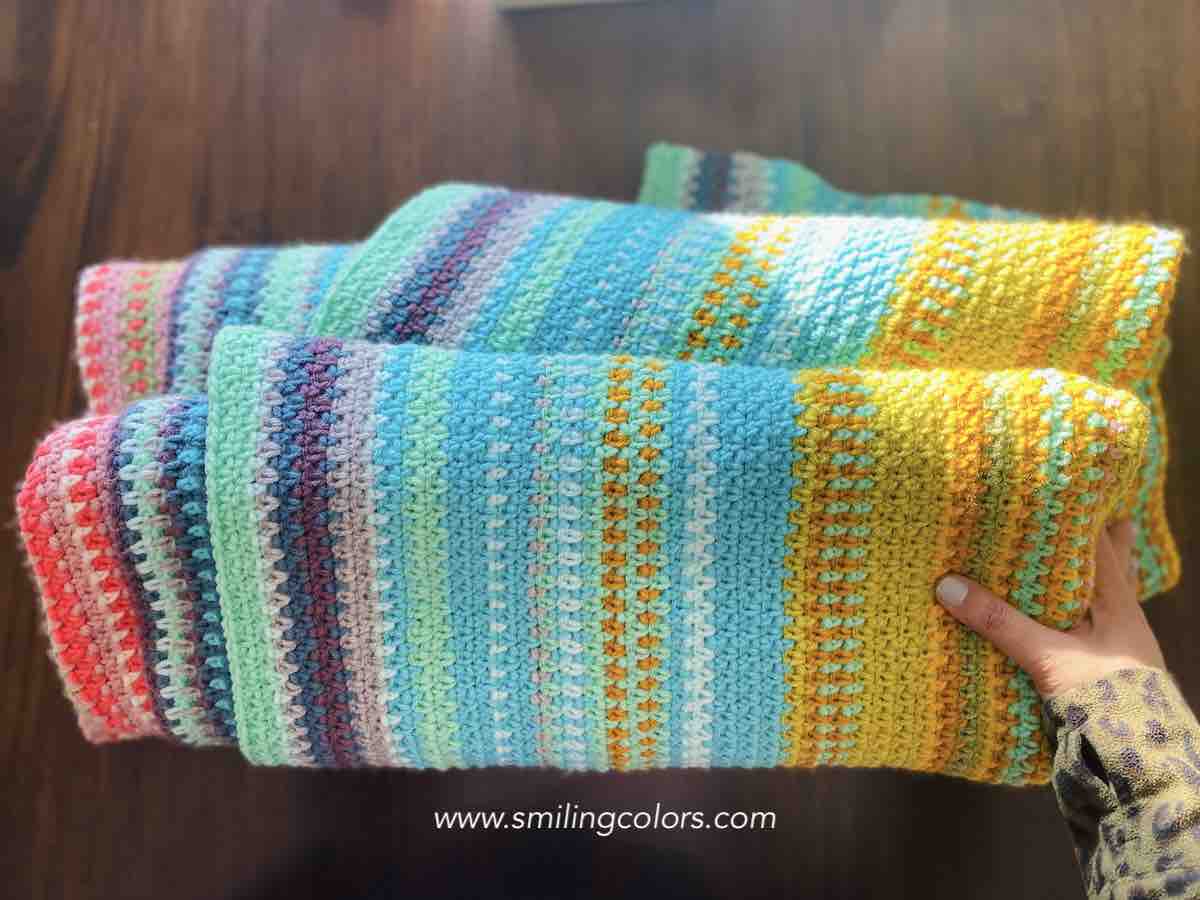

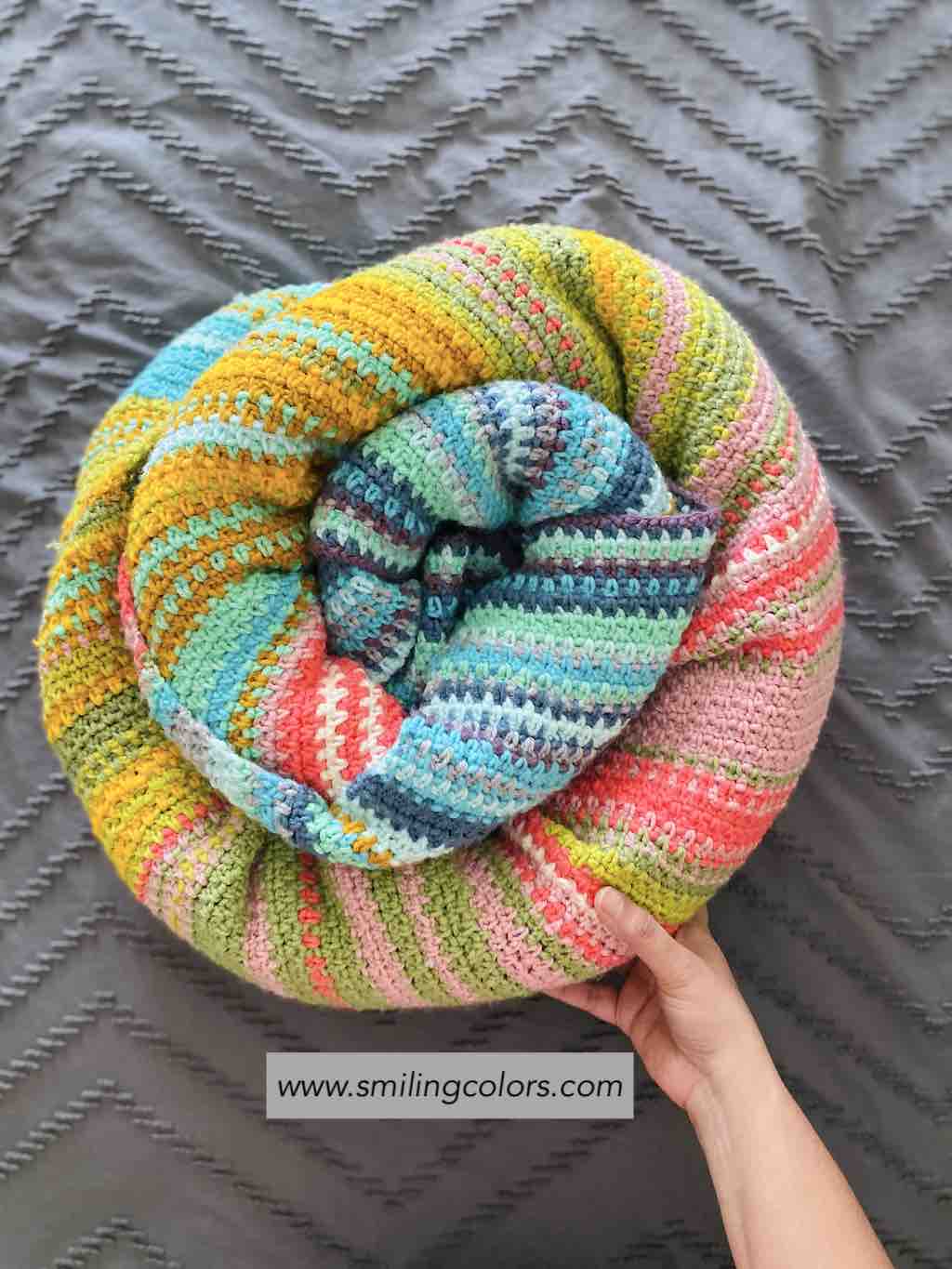
The finished blanket is more than half the size of our King bed! This is a great crochet home project.
Is it too late to start a Temperature Blanket?
I’ve seen many people start their blankets in the middle of the year and document the next 365 days. You can also make historical blankets based of the temperature of a special year in your life. Many crocheters actually like to have all the temperature data in hand before planning the blanket to make it much easier!
tips:
- Join a Facebook group like this Crochet Temperature Blanket Year after Year group. You will find companionship, learn from others mistakes and watch everyones blanket grow along side yours!
- Choosing colors– pair any two colors that you have chosen, place them side by side and see if they work together.
- Create a mock up– Try inputting your color estimates into a Weather Data Art site and see a mockup.
- Download these Temperature Color Chart Tracker pdf and Temperature Tracker pdf. Print and keep your yarn colors, and weather data organized.
- Be flexible: There will be ups and downs, and at some point you probably will fall behind, but the happiness is in the process. Don’t aim for perfection, and simply enjoy crocheting!
FAQS
Do you use the high or low for a temperature blanket?
I recorded ONLY the High temperature daily and incorporated those values into my blanket. You can choose to focus on the daily high, daily low, or both temperatures. The choice is yours.
How many rows a day for a temperature blanket?
One row per day if you are recording the daily High temperatures. Two row per day if you are recording BOTH the daily high and low temperatures.
How many rows should a temperature blanket be?
365 rows
CONCLUSION:
A Temperature blanket or weather blanket is a very unique way of documenting a year. You can choose to use the temperatures of the current year, or make this a special blanket by using temps from someone’s birth, wedding, or another important event year.
There is so much comfort in this project- you can reach for it each night- excited to learn which color you will be using next! I am documenting the daily high temp and so far we’ve seen temps between -10 to 30F. Typical Minnesota.
I’d love to hear from you in the comments if you have made such a blanket and have tips for me. Next, I am going to try Planned Pooling For Crochet. If you’re looking for more fun blanket projects beyond your temperature blanket, check out my free crochet blanket patterns ideas for lots of cozy inspiration.
Thank you for being here today and spending some creative time with my friends! I’m so thankful for your kind words and support.